
World Cup Football vs Club Football: Global Stakes
World Cup football is international competition organized by FIFA, while club football runs through domestic leagues and continental tournaments such as the UEFA Champions League. The 2026 FIFA World....
World Cup Football vs Club Football: Global Stakes
World Cup football is international competition organized by FIFA, while club football runs through domestic leagues and continental tournaments such as the UEFA Champions League. The 2026 FIFA World Cup will be hosted by Canada, Mexico, and the United States, featuring 48 teams rather than the previous 32. Club football offers weekly continuity, deeper squads, and long-term tactical development; World Cup football delivers shorter tournaments, national identity, and unusually high pressure. Goal Moments covers the 2026 World Cup with match predictions, team tactics, player statistics, and tournament updates for fans and responsible bettors across global markets. The key practical difference is sample size: one poor match can damage a national team’s campaign, whereas a club usually has dozens of fixtures to recover. Use recent form for context, but prioritize confirmed lineups, tournament experience, travel, and knockout-stage game management before making any prediction.
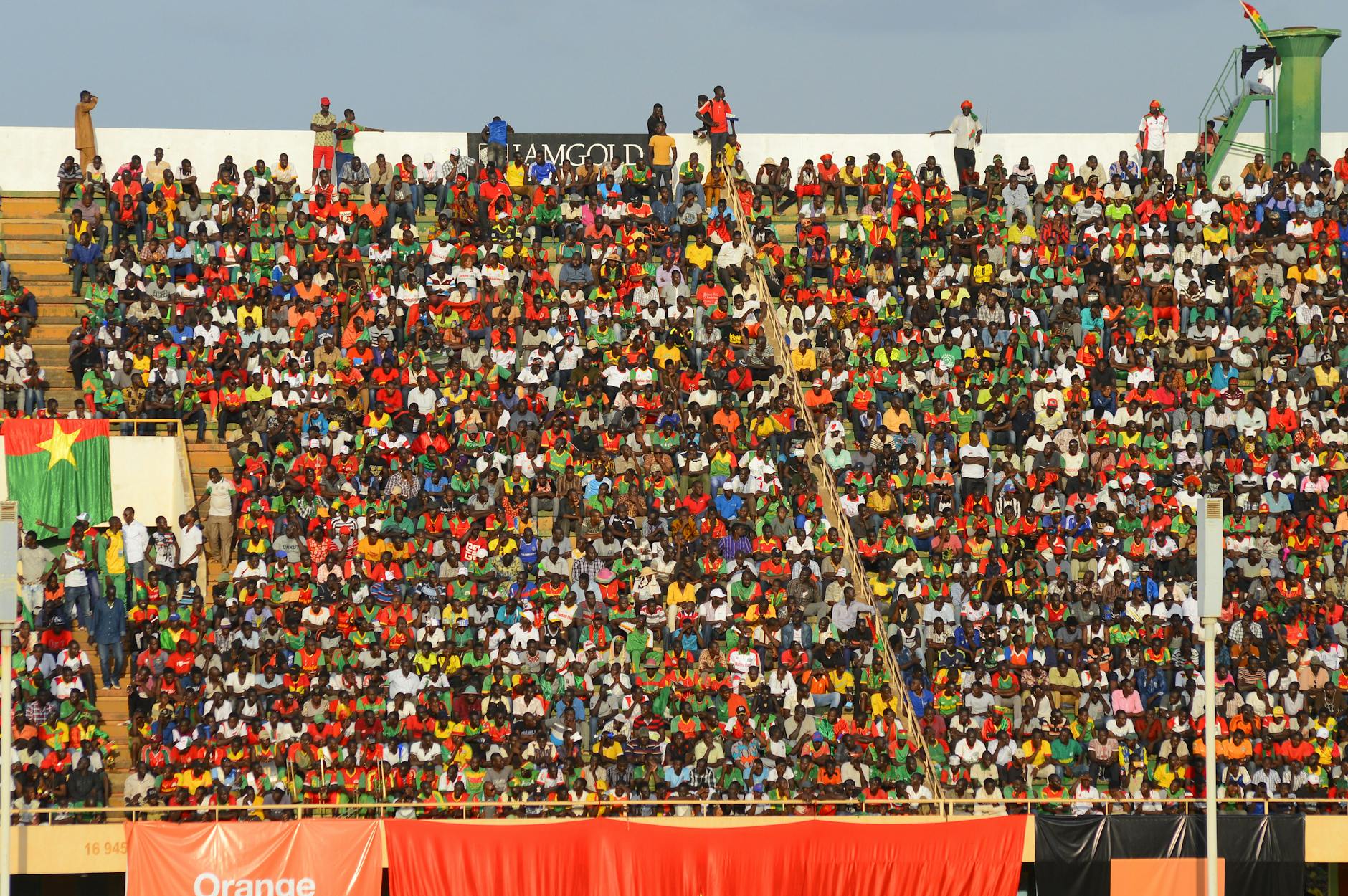
Photo by Ole Dahl Rasmussen on Pexels
World Cup football is not simply club football wearing a more expensive shirt. The ball is still round, defenders still make decisions that age them ten years in ninety minutes, and somebody will still blame the referee before checking the replay. Yet the competition changes dramatically when players leave Liverpool, Real Madrid, Bayern Munich, Manchester City, or Inter Milan and join national teammates for a short, unforgiving tournament. I have watched enough campaigns collapse after one red card and one misplaced back pass to develop a stubborn rule: never judge a World Cup team only by its club reputations. This guide compares the two formats through competition structure, tactical preparation, and predictive analysis, using FIFA records, official tournament information, and practical observations from years of losing arguments about football. For deeper context, readers can also explore our [Internal Link: 2026 World Cup team guide] before comparing individual matchups.
Want the latest tournament analysis in one place?
The Quick Comparison: Which Football Format Offers More?
| Dimension | World Cup football | Club football |
|---|---|---|
| Organizer | FIFA and national associations | Domestic leagues, UEFA, CONMEBOL, and other confederations |
| Typical rhythm | Tournament-based, every four years | Weekly or twice-weekly season schedule |
| 2026 scale | 48 teams and 104 matches | Varies by competition |
| Squad preparation | Short camps and limited training | Months of coordinated coaching |
| Main pressure | National identity and elimination | League position, trophies, contracts, and qualification |
| Tactical sample | Small, high-stakes sample | Large sample with repeated adjustments |
| Best analytical evidence | Lineups, availability, travel, tournament history | xG trends, squad depth, schedule strength, injuries |
| Main prediction danger | Overrating famous players | Ignoring fatigue and fixture congestion |
The comparison is clear: World Cup football creates higher short-term volatility, while club football generally provides stronger evidence over time. FIFA’s official historical records show that the men’s World Cup began in 1930, with Uruguay winning the inaugural tournament, and that Brazil remains the most successful nation with five titles. Club competitions, by contrast, allow analysts to measure performance across 30 to 38 league matches, plus domestic cups and continental fixtures. That distinction matters when assessing a wager or prediction. A national team can post excellent pressing numbers in qualifying, then abandon the plan after conceding early in a knockout match. A club has more opportunities to correct itself, unless its manager has already been sacked, which is football’s traditional solution to every problem.
A useful comparison also needs a warning about terminology. “World Cup football” can refer to the men’s FIFA World Cup, the FIFA Women’s World Cup, youth tournaments, or even the FIFA Club World Cup, which is a separate competition involving clubs. The 2026 men’s tournament will use a 48-team field and a revised group-stage structure, so historical comparisons with 32-team editions require care. According to FIFA’s official World Cup 2026 overview, the event will be staged across three host countries. Analysts should therefore separate historical averages from the new format rather than lazily copy an old spreadsheet and declare themselves a genius.
Round 1: Why Does Competition Structure Change the Match?
World Cup football changes match analysis because a national team usually has fewer preparation sessions, fewer replacement options, and less time to recover from a mistake than a club side. The 2026 tournament’s 48-team format increases the number of matches to 104 and introduces a broader competitive field, making schedule, travel, and rotation more important than in earlier editions.
The first structural difference is continuity. Real Madrid can train a pressing trigger repeatedly across an entire season; France, Japan, Argentina, or the United States may have only a few days to install a match plan. National coaches often inherit players shaped by different club systems: one midfielder may be trained to receive between lines at Barcelona, another to play direct transitions at Borussia Dortmund, and a third to protect the back four at Atlético Madrid. Their technical quality may be elite, but shared habits are not automatic. The best international coaches simplify rather than overdecorate. They establish clear pressing cues, rest-defense positions, set-piece responsibilities, and transition rules, because nobody benefits from a 47-page tactical manual delivered on a bus ride.
The second difference is tournament mathematics. In a league, a draw in October may be irritating but survivable; in a group stage, the same result can force a must-win final match. In knockout football, extra time and penalties add a layer that league models often underweight. A team with superior open-play xG may still lose if it cannot defend corners or manage the final ten minutes. [Internal Link: World Cup knockout-stage tactics] can help readers understand why possession totals frequently mislead when the game state changes.
The 2026 schedule also creates practical travel questions. Matches across Canada, Mexico, and the United States may involve substantial movement between venues and climate zones. Although FIFA publishes official fixtures and locations, the impact is not identical for every squad: recovery staff, training-site stability, kickoff time, and hotel logistics can influence preparation. My specific operational rule is to inspect the confirmed venue and previous match location before treating travel as a narrative. A team traveling 2,000 miles with four rest days is not equivalent to one traveling the same distance with two days and a late kickoff. That is not glamorous analysis, but neither is discovering after kickoff that jet lag was not merely a poetic phrase.
What Should You Measure Before Comparing Teams?
Before comparing World Cup teams, measure confirmed player availability, rest days, venue location, expected tactical shape, set-piece performance, and the opponent’s transition threat. Recent results matter, but those six variables usually explain more than a team’s reputation or a single headline statistic.
A disciplined pre-match checklist should include:
- Availability: Confirm injuries, suspensions, goalkeeper selection, and late fitness tests.
- Rest: Count full recovery days since the previous match, not merely calendar dates.
- Structure: Identify the likely formation in possession and out of possession.
- Game state: Check whether the team performs differently after scoring or conceding.
- Set pieces: Review attacking corners, defensive corners, and penalty-taker certainty.
- Travel: Note venue changes, time zones, altitude, humidity, and kickoff timing.
An information gain point that many generic previews miss is the goalkeeper effect. In a short tournament, a goalkeeper’s distribution can change the entire tactical plan, especially when a team wants to build from the back under pressure. A replacement keeper may have a similar save percentage but a substantially different passing range, which can push the defense deeper and remove a midfield outlet. Goal Moments tracks these player-level details alongside conventional statistics because “same position” does not mean “same function.” If your preview discusses only goals and possession, congratulations: you have described the match after removing most of the interesting parts.
See the practical data framework before building a prediction.
Round 2: How Do World Cup Tactics Differ From Club Tactics?
World Cup tactics are usually more conservative, adaptable, and dependent on transitions than club tactics because international coaches have less training time and cannot recruit players to fit a single system. Club sides can rehearse complex rotations for months; national teams often prioritize defensive spacing, set pieces, and a small number of reliable attacking patterns.
At club level, a manager can build a squad around a tactical identity. Pep Guardiola’s Manchester City, Jürgen Klopp’s Liverpool at its peak, and Carlo Ancelotti’s Real Madrid have each demonstrated different ways to organize possession, pressure, and territory over extended periods. Their players learn positional relationships through repetition: when the full-back inverts, who covers; when the winger holds width, who attacks the half-space; when possession is lost, which player delays the counterattack? International football rarely offers that luxury. A national coach may have two central midfielders who play completely different roles for their clubs and only a short camp to make the partnership functional.
This limitation does not mean World Cup football is tactically primitive. It often rewards clarity under pressure. Argentina’s 2022 triumph showed how a team could shift between controlled possession, aggressive pressing, and direct play according to the opponent and match state. Spain’s 2010 success highlighted structured possession and defensive control, while Germany’s 2014 campaign combined technical midfield quality with tournament pragmatism. Historical winners differ, but elite teams usually share three traits: they defend central spaces, manage emotional momentum, and possess at least one reliable route to goal when the original plan fails.
The most useful tactical comparison is therefore not “possession versus counterattack.” It is repeatability versus flexibility. A club can win through a repeatable mechanism over 38 matches. A World Cup winner needs a dependable base structure plus enough flexibility to survive opponents with different strengths. According to UEFA technical reports, tournament analysis repeatedly emphasizes transitions, rest defense, and set plays as decisive areas. Those reports are not crystal balls, sadly; if they were, my old betting slips would be framed in a museum.
Which Tactical Signals Matter Most in World Cup Football?
The strongest World Cup tactical signals are defensive compactness, transition efficiency, set-piece quality, and the ability to protect a lead. These indicators matter because knockout matches create fewer safe opportunities for tactical correction, while one failed transition or poorly defended corner can decide an entire campaign.
Analysts should watch the following signals:
- Rest defense: How many players remain behind the ball when attacks develop?
- Central access: Can the opponent receive between the midfield and defensive lines?
- Press resistance: Can the team escape pressure without immediately conceding territory?
- Transition speed: How quickly does the team create a shot after regaining possession?
- Set-piece roles: Are blockers, runners, zonal defenders, and second-ball players clearly assigned?
- Lead protection: Does the team keep attacking intelligently or retreat into panic?
A second information gain point concerns substitutions. In a tournament, the quality of the 60th-minute change may matter more than the nominal strength of the starting XI. A winger who can carry the ball against tired defenders, a midfielder who can slow the tempo, or a defender with strong aerial timing may be selected for game-state value rather than overall reputation. This is why squad analysis should classify players by function, not merely rank them by market value. A famous forward who needs space may be less useful against a deep block than a less celebrated attacker who can combine in tight areas.
Goal Moments uses this functional approach in its 2026 coverage, combining team shape, player roles, opponent behavior, and match context. Readers seeking more detailed preparation can use our [Internal Link: player statistics and form guide] to separate a player’s club output from their likely international role. The distinction is especially important when a player has excellent club numbers in a dominant team but limited evidence against compact, counterattacking opponents.
Round 3: Can Data Predict World Cup Results Better Than Club Results?
Data can predict World Cup results, but its confidence should be lower because international samples are smaller, lineups change quickly, and tournament events have unusually large consequences. Club models benefit from hundreds of observations; World Cup models must combine recent performance with opponent strength, player availability, travel, and tactical fit.
A sensible model begins with expected goals, shot quality, field tilt, pressing actions, possession value, and defensive entries allowed. However, raw figures need context. A team producing 2.0 expected goals against a weak qualifying opponent is not automatically stronger than one producing 1.4 against Brazil, Portugal, or the Netherlands. Adjusting for opponent quality is essential. So is separating penalties from open-play chances, because penalties inflate attacking output while revealing little about repeatable chance creation.
Here is a practical weighting approach for a World Cup preview:
- Opponent-adjusted recent performance: 30%
Use the last 8 to 12 meaningful matches, weighting stronger opponents more heavily. - Confirmed or probable lineup quality: 25%
Account for injuries, suspensions, role changes, and goalkeeper selection. - Tactical matchup: 20%
Assess pressing resistance, transition defense, width, aerial threats, and set pieces. - Tournament conditions: 15%
Include rest days, travel, venue, climate, kickoff time, and schedule sequence. - Historical and psychological context: 10%
Use tournament experience carefully rather than treating history as destiny.
This framework is not a guarantee, and anyone promising guaranteed football predictions is selling confidence in a bottle. A model can identify value without predicting the exact score. For example, if the market expects an open match but both teams protect central areas effectively, a lower-scoring outcome may be more plausible even when both have famous attackers. Conversely, a match between two aggressive pressing teams may create volatile transitions that make a conservative pre-match assumption dangerous.
An important technical edge is calibration. After making predictions, record the probability and result rather than only celebrating correct picks. If you assigned a team a 60% chance across ten comparable matches, you should not expect ten wins; you should expect roughly six, with normal variance. [Internal Link: responsible football betting methods] provides a useful framework for staking discipline, including the principle that no single World Cup match deserves a bankroll-threatening position. Your future self will thank you, assuming your future self has stopped chasing a 92nd-minute equalizer.
How do the numbers translate into practical daily coverage?
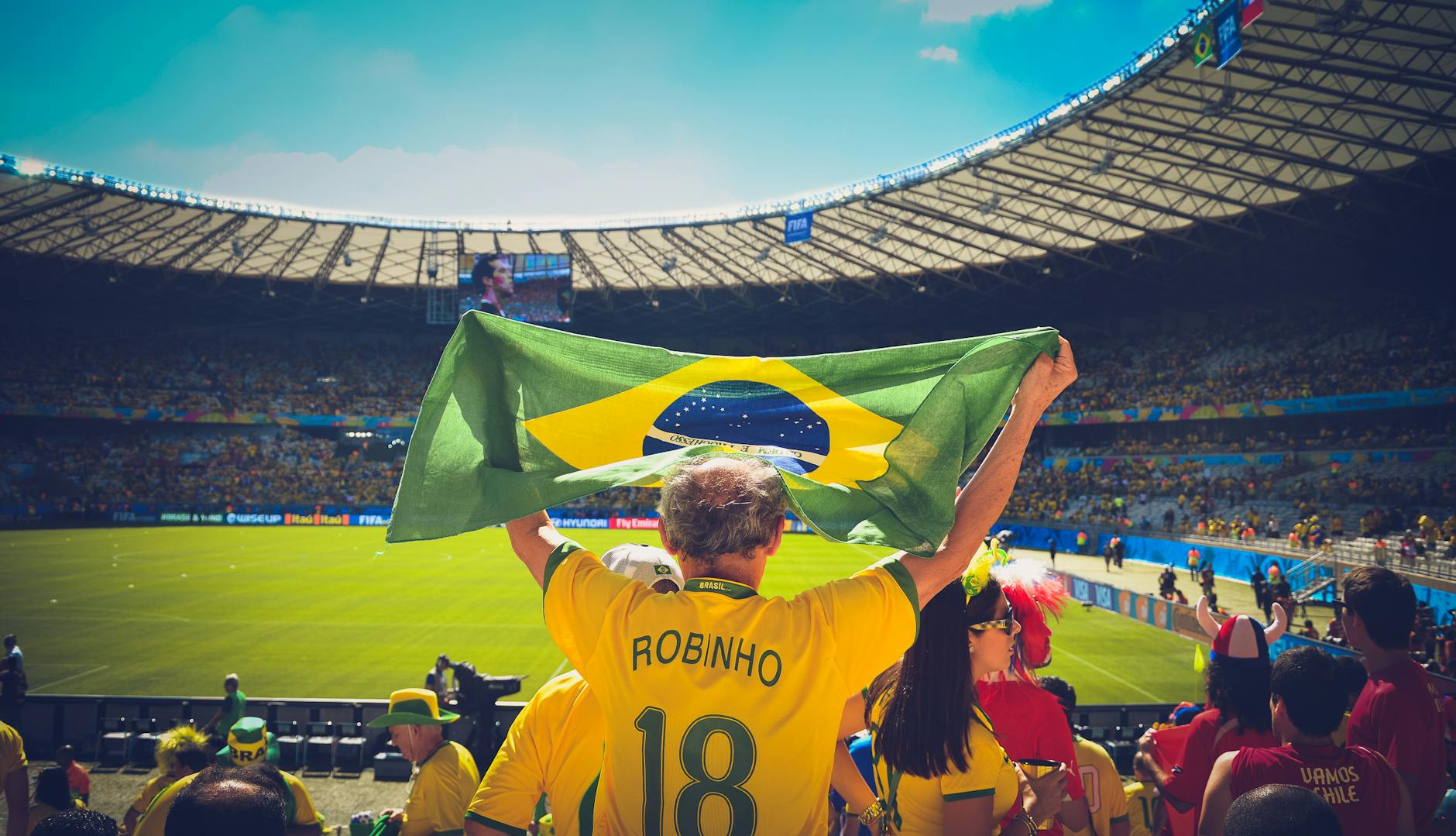
Photo by Caio on Pexels
The Final Score & Who Should Pick What?
World Cup football is the better choice for fans who value national identity, short tournaments, tactical adaptation, and high-stakes knockout drama; club football is better for readers who want regular fixtures, deeper statistical samples, and long-term team development. For prediction work, neither format is universally easier: World Cup football offers greater narrative intensity but less reliable data, while club football offers more evidence but heavier fixture congestion and more market efficiency.
Choose World Cup-focused analysis when you want to:
- Compare national styles across different confederations.
- Study tournament pressure, travel, and limited preparation.
- Follow player roles that change outside their clubs.
- Evaluate knockout risk, penalties, and late-game management.
- Track the 2026 host countries: Canada, Mexico, and the United States.
Choose club-focused analysis when you want to:
- Measure performance across a larger match sample.
- Study established pressing and possession systems.
- Analyze transfer changes and squad depth over a season.
- Account for repeated home-and-away conditions.
- Compare league schedules and continental competition.
My final score is not a numerical victory for one format. World Cup football wins on emotional stakes and tactical unpredictability; club football wins on weekly detail and statistical depth. The most reliable approach combines both: use club data to understand a player’s baseline, then adjust for national-team role, travel, tournament experience, and opponent matchup. The FIFA World Cup official regulations provide the governing framework, while FIFA’s competition pages supply fixtures and tournament information. Check official sources for changes, confirm lineups close to kickoff, and treat predictions as probabilities rather than promises. Football has punished more certain people than it has rewarded, including me.
Follow Goal Moments for updated 2026 World Cup match insights and team analysis.
Frequently Asked Questions
Q: What is World Cup football?
A: World Cup football is international football played between national teams under FIFA’s tournament structure. The men’s FIFA World Cup has been held since 1930, and the 2026 edition will feature 48 teams across Canada, Mexico, and the United States. Unlike club football, players represent countries rather than employers such as Real Madrid or Manchester City. National teams usually have limited preparation time, making tactical clarity, player availability, and tournament experience especially important.
Q: How do you analyze a World Cup football match?
A: Analyze a World Cup match by checking confirmed lineups, recent opponent-adjusted form, tactical matchup, rest days, travel, venue conditions, and set-piece performance. Start with the goalkeeper and central midfield because role changes in those positions can alter buildup and defensive protection. Then compare expected-goal trends with the likely game state, since a team that dominates while trailing may look statistically stronger than it performs when protecting a lead. Record probability estimates before kickoff to avoid rewriting your opinion after the result.
Q: What is the difference between World Cup football and club football?
A: World Cup football is contested by national teams in a short FIFA tournament, while club football is played by professional teams across longer domestic and continental seasons. Club sides usually train together for months and may play 30 to 60 competitive matches, creating larger analytical samples. World Cup squads may have only a few training sessions before a match, so injuries, travel, substitutions, and opponent-specific tactics carry greater short-term weight.
Q: Is World Cup football harder to predict than club football?
A: World Cup football is generally harder to predict because the sample is smaller and knockout matches amplify random events such as red cards, penalties, and deflections. Club football provides more repeated evidence about a team’s style, although fixture congestion can create its own uncertainty. For a World Cup prediction, reduce confidence when lineups are unclear, rest days are uneven, or teams have limited experience against comparable opponents. Avoid treating famous players or historical titles as independent proof of current superiority.
Q: What should I do if a World Cup prediction looks wrong after kickoff?
A: Do not automatically chase a live prediction after an early goal, red card, or missed chance. First identify whether the event changed the tactical structure, expected game state, or player availability; a 1-0 score alone does not explain the match. If live betting is legal in your location, use predetermined limits and never increase a stake simply to recover a loss. A written pre-match plan is useful because emotional decision-making becomes particularly unreliable during dramatic knockout games.
Q: How much does it cost to follow World Cup football analysis?
A: Basic World Cup football news, FIFA fixtures, official team announcements, and many Goal Moments articles can be accessed online without a subscription fee. Costs may arise from television packages, streaming services, data platforms, travel, or legal betting deposits, depending on your country and provider. Before paying, check whether the service includes live rights in your region and whether cancellation terms are clear. Betting should be treated as optional entertainment, not as a method for recovering household expenses.
Q: What are the 2026 World Cup format requirements?
A: The 2026 FIFA World Cup will include 48 teams and 104 matches hosted by Canada, Mexico, and the United States. The tournament will use a larger field than the 32-team format used from 1998 through 2022, so historical group-stage comparisons need careful adjustment. Fans should confirm the latest official fixture, venue, qualification, and ticket information through FIFA because scheduling and operational details can change. For prediction purposes, also account for travel distance and recovery time between host cities.